Category: Blog Post

  • Podcast

    Gunny’s Sea Stories and Smoke Pit Odysseys

    I spent 15 years in the U.S. Marine Corps and during that time my friends and I experienced near daily hilarious situations. These stories, often referred to as “Sea Stories” (tall tales) were often told to an audience in designated smoking areas. We believed these stories were unique to the Marine Corps and could, in a funny way, make the branch more…or less…relatable. At some point I started to keep a notebook of my own stories and the ones I picked up while transiting smoke pits. Since most of us didn’t really want our name put into the public, it was a no brainer that the narrator should be a nameless Gunnery Sergeant or “Gunny”. Gunnys are unique to the Marines and often used to symbolize the Corps as a whole. If you want to learn more about Gunnery Sergeants, check out Battle Order’s web post about the Origin of the Gunnery Sergeant.

    Episode 1: Deer Choke
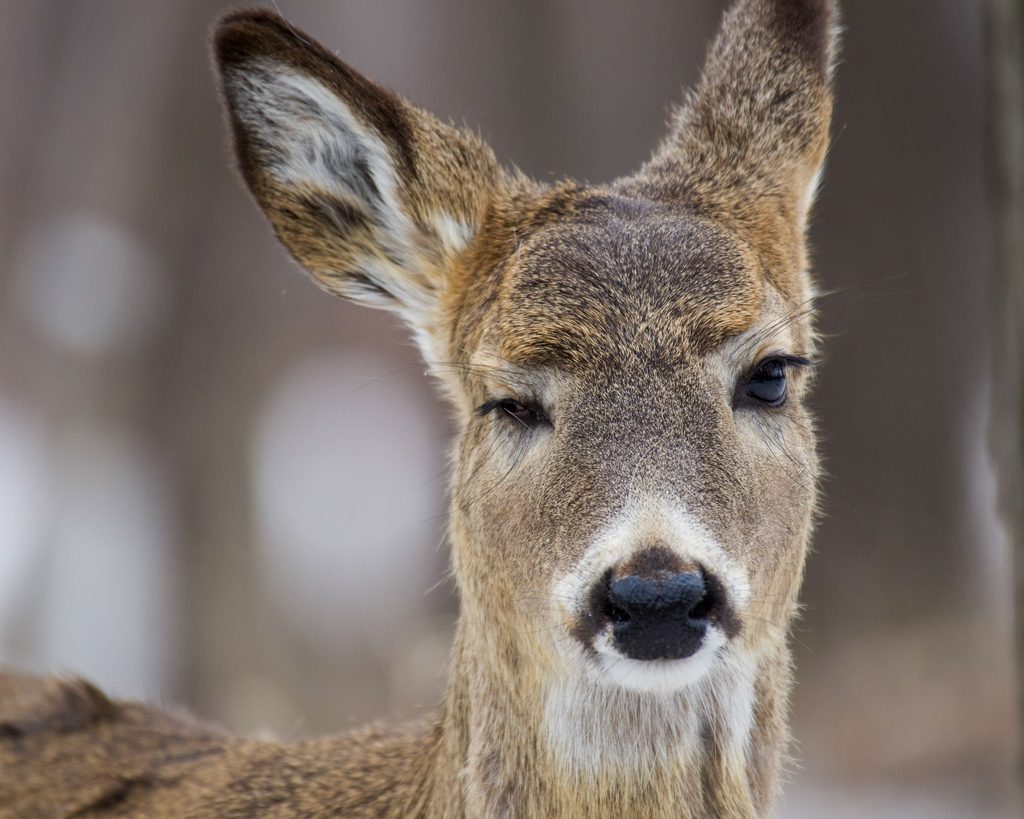
    Close up photo of a doe Whitetail Deer's face that appears to be winking one eye.
    Whitetail Deer by Andrew Patrick found at www.pexels.com

    Project Process

    Since I have never recorded or edited audio before I had to rely on what was already free and available. All of the audio recording was done by my Samsung S22. I downloaded a voice recording app and got to work. My two sound effects clips were done by holding my phone next to the sound I was trying to capture. For the first, I held it close to ground as I walked through some under brush. For the second I just held it in my hand as I turned the keys in the ignition, opened, and closed the door of my truck. For the narration, I found a quiet room and just spoke into the phone. I was surprised by how well my phone seemed to work. Once I was satisfied that I recorded enough content, I saved all of the clips to my laptop. From there I uploaded all of them onto soundtrap.com which I found to be rather intuitive. I was able to adjust the length and order of each clip to make it fit the 2 minute requirement. It didn’t take long for me to learn how to fade certain sound effects or music clips as narration began. If anyone is interested in making podcasts, I highly recommend Sound Trap, its free and really easy to learn.

    Credit/Attributions

    While editing in Sound Trap I found that there was a toolbar on the right hand side of the site called Sound Library where they offered a lot of melodies for free. In there I used: Drums – Rock Basic Beat 8ths 5, for my intro and outro music. For the banjo effect when learning that Marines had went after the injured deer, I used: Wildfire – Woo (Banjo) E. All of the voice acting was done by me Rob Hatch. The person that wrote the story wishes to remain anonymous, so he’ll just be known as: Gunny.

    For context to the “I am green belt” reference, the Marines have their own recognized martial arts discipline known as the Marine Corps Martial Arts Program (MCMAP). MCMAP is a program that every Marine is required to participate in and information about the program can be found at marines.mil the official program web page.

    I also want to offer an explanation as to why the fall season was relevant to the behavior of deer. If you are a hunter or grew up around deer hunting, you would consider this to be common knowledge. But for those who do not; male deer (bucks) in the fall months, Sept-Nov will have higher levels of testosterone. So during their breeding season, bucks will often chase females, sometimes into traffic, in an attempt to mate. For a more detailed explanation of deer behavior, the deeranddeerhunting.com web article Behind the Hide is an excellent source.

    Transcript

    [Drum Music]

    00:00:01 Narrator

    Welcome to Gunny’s Sea Stories and Smoke Pit Odysseys, where I share stories about daily life in Marine Corps. This story is called Deer Choke. It was a fall day right in the middle of hunting season on Camp Lejeune. A few deer jumped out into the road. A car going the other direction couldn’t avoid it and smashed into one of them. So I turned around, and by the time I walked up, the driver was on the phone.

    [sounds of a car door opening and closing]

    00:00:33 Narrator

    He covered the mouthpiece of his phone and said:

    00:00:37 Driver

    “I’m on the phone with the MPs.”

    00:00:37 Narrator

    I nodded and started looking around. That’s when I noticed another car was there, but no one was inside and no one was around either. I looked back at the guy on the phone and asked where they went.

    00:00:47 Driver

    “That deer I hit was still alive but dragging its back legs. I think they went in after it.”

    00:00:51 Narrator

    I must have made an exacerbated look on my face. Because before I could say anything, he shrugged his shoulders and said:

    00:00:55 Driver

    “I have no idea what they’re doing, Gunny.”

    [Banjo music plays]

    00:01:01 Narrator

    Oh, now my Spidey senses are going off. So I follow that trail they left. As I got close, I could hear them talking.

    [Sounds of running and crashing through brush]

    00:01:10 Unnamed Marine

    “Hey, don’t worry. I’m a green belt. I’ve got this.”

    00:01:15 Narrator

    When I got there, I saw a Marine standing over a deer with both his hands wrapped around its neck, performing a cartoonish looking choke. So I yelled: “whoa, stop, what are you doing?” And without letting go, he just simply looks up at me and says:

    00:01:28 Unnamed Marine

    “well gunny, we gotta put it out of its misery.”

    00:01:32 Narrator

    I hold my hand up and I say: “oh my god, no, not like that we aren’t. Let go of that poor thing.” They tried to protest, but I assured them that I’d call the game warden. Then I thanked them for their service and I sent them on their way.

    00:01:43 Narrator

    I can’t believe what I just saw. This is the last thing I had on my bingo card for this afternoon.

    [Drum Music]

    00:01:50 Narrator

    If you liked this story and would love to hear more, stay tuned for next week.

    This was Gunny’s Sea Stories and Smoke Pit Odysseys. I’ll see you all next time.

  • Podcast Outline & Recording

    Topic

    While I was in the Marine Corps I started to keep a note book of the funny stories that either my friends or I experienced. The criteria for making it into the notebook was that we all agreed it was a “only in the Marine Corps” kind of story. I used to joke that I would publish it as a coffee table book one day. I decided to use one of those stories for this podcast. This one is called: Deer Choke.

    Script

    Since the story was just a rough draft, I decided to break it up by the intro/outro, sound effects, narrator, and character voices. This helped to make sure that I knew when it was time to change voices and I would take a few second pause between each voice or line to make it easier during editing.

    Recording

    I only used my phone since I don’t have any other recording devices. I have a voice recorder app that I have used frequently in the past. To record the desired sound effects, I held my phone close to the ground when walking through the woods or the car sounds until I felt it was good. For the voice recording, I found a quiet room away from everyone and would replay and re-record until I felt they were good enough to work with in editing. If you are interested in what the rough recordings sound like or the script looks like you can see them on my UMW OneDrive project folder.

  • Images

    Here I discuss how I learned to create different types of images and applied them to my page.

    Creating a Favicon

    Graphic design of a white radish. Grey with dark grey accent lines and bright green leaf sprouts.
    by Rob Hatch, created in Affinity.

    I set out to create a unique site icon know as a “favicon”, its a small symbol that is seen next to the name of the website on the tabs of your browser. I created the image above with the Affinity graphic design software. It took some time to learn, but it functions similarly to most Microsoft programs. If you have used PowerPoint or any other program that allows you to crop, edit, or draw over an image, you’ll be familiar. Before I started to draw anything I created a new square canvas with an aspect ration of 1:1. I chose the 1000-pixel grid and manually adjusted the page height and width to 512px X 512px, this is important or it wont work as a favicon. To make the shape of the radish I used the “Heart Tool” to drag and manipulate the heart until it resembled the classic elongated carrot/radish shape. I used the “Path Brush Tool” to draw on the horizontal accent lines and adjusting the width and color of the stroke. Once the lines were drawn, I used the “Stroke Width Tool” to create the uneven taper for the lines. For the sprouts, I used the Path Brush tool again but this time I only drew a few lines at the top of the sprout. It didn’t look like a leaf until I used the “Blend Tool” to replicate and connect the lines to form the leafy sprouts. When I was finished, I exported the image as a .png file, since this is the recommended file type for a favicon. The software that I used can be downloaded for free here: Affinity Download page.

    Header Image

    A bushel of white radishes.
    Photo by Blowing Puffer Fish, posted on flickr.

    This turned out to be more difficult than I thought it would be, in fact I had to use my “phone a friend” life line. Finding and altering the image was easy enough, I found it on flickr then uploaded it to Canva digital design webpage and applied a filter to increase the color contrast. Now comes the part that tripped me up, editing and creating a custom theme that allows for a banner photo. Once you have entered the editing portion of your WordPress page, on the tool bar on the left of the screen select appearance and then themes. If you have an active theme already, select customize at the bottom of the page. You will be brought to a page that allows you to make edits to your current page, a new set of options will appear on the left, select patterns. It will display a bunch of premade patters (most you have to pay for) but on the left there is a section for headers, that will present you a few options. Pick one that has a header image already. It will open a new editing page, click on the image, then the top tool bar select replace to either upload or open from your media library. I made sure to save my image as a .jpg as WordPress recommends. Now your photo should be in the banner, you can adjust the image focus and width of the header from there. Once saved, check to make sure that this header is displayed throughout your whole page.

  • Copyright and Attribution

    This week I want to go over what I have learned in class about copyright, creative commons, and attribution.

    What is copyright?

    Woman in white shirt sitting indoors on a couch, gesturing with a confused expression, hands up in a shrug.
    By Polina Zimmerman, posted on www.pexels.com

    From the reading assignments web article The Cyberlaw Guide to Protest Art: Copyright, an explanation of what copyright is, what I understand copyright to be is the legal protection of a person’s creative works. Those works could be any kind of art; meaning drawings, music, videos, photos, writing, etc. The copy right protection means that only the creator/owner of the work, unless they give permission to someone, has the sole right to sell their work. Preventing someone else from copying their work and selling it for themselves. The purpose is to ensure that people who spend time, money, and effort on creating something will get to make money buy selling their work. If as soon as someone created something new, everyone could just copy it and sell it as their own, the creator would lose a lot of the profit.

    What is the Creative Commons?

    I chose the creative commons: CC BY-NC 4.0 Attribution-NonCommercial 4.0 International license because the blogs on this subdomain are all projects for the University of Mary Washington Intro to Digital Studies: DGST 101 Course. Since they are all school projects, I chose to make the work in this blog to be the most permissive. By doing so, re-users have the most freedom to, as creative commons summarizes: “to distribute, remix, adapt, and build upon the material in any medium or format, so long as attribution is given to the creator” creativecommons.org summarized explanation of the six types of creative commons licenses.

    What about attribution?

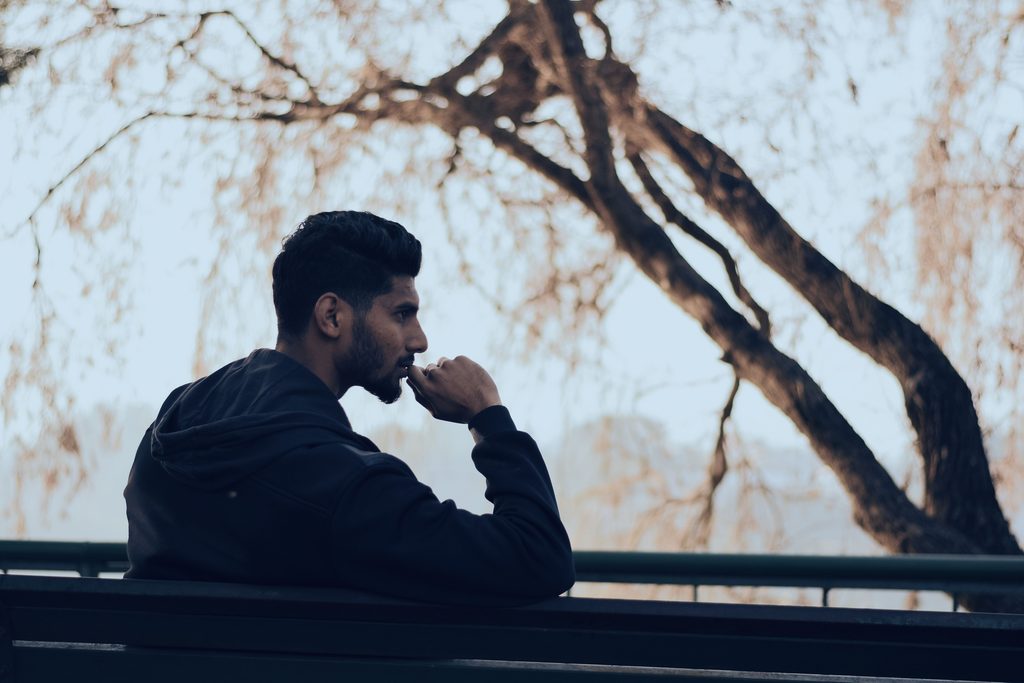
    A side profile of man sitting on a park bench. His hand is to his mouth and his facial expression is that of contemplation.
    By Chinmay Singh posted on www.pexels.com

    Attribution is when you cite the creator when you use, quote, talk about someone’s work. Some people will state on their website how they want to be cited, you will see that on peer reviewed journals also. If they do not specify or you cannot find the original creator, you do you best to cite where you found it. Essentially, you are giving them credit for their work. However, some people will chose not to share their work for free, generally you will see a watermarked or reduced image posted on their website. Some work can be considered “public domain” if the copyright has expired, has been removed by the creator, or was produced by the government. However, it is still good practice to cite whenever possible.

    Images from the comic strip Calvin and Hobbes, shows two image panels. The first on the left is a picture of Calvin looking over his shoulder with a cheeky grin as he is filling up a water balloon. Then next panel on the right shows Calvin's feet running with a dust cloud behind him.
    Calvin and Hobbes by Bill Watterson posted on the Screen Rant web article “Calvin & Hobbes Infamous Urinating Decal, Explained” by TJ Mills

    What about “fair use”?

    This gets tricky, typically you are not allowed to use another person’s work for your own gain. Unless you are criticizing it, because it would be unreasonable to have to ask permission of someone to write negatively about their work. However, using a work and transforming it into something else is generally considered fair use. As well as using it for educational purposes. A good example of fair use is Calvin and Hobbes, a common sticker seen on the back of cars is a depiction of Calvin urinating on a logo. According to the Palette Swap web article by Kevin Podas the creator of Calvin and Hobbes, Bill Watterson did object to the depiction of Calvin Urinating. Only later did he decide to allow that image to be considered fair use. The bottom line is, be sure cite the creators whenever possible and do you due diligence prior to using someone’s work.

    A picture of a sticker where Calvin has his pants down and is urinating on a Ford logo.
    Creator unknown. Image found on Screen Rant article: Calvin & Hobbes Infamous Urinating Decal, Explained, by TJ Mills.
  • Who am I on the web?

    Who am I on the web?

    A bushel of white radishes displayed upon a table.
    Credit: www.pimgminghealth.com Article: Chinese White Radish (Daikon) for Bloating and Indigestion

    Now that I am thinking about it, I don’t have much of a presence on the internet. Not to date myself but, I started with an America Online (AOL) account, then I made an AOL Instant Messenger (AIM) account. Back then it was THE cool way to message your friends. Then came Myspace, which was basically Facebook before Facebook. Now I have Facebook and Instagram, but I haven’t posted much of anything in years. I mostly surf Facebook Market Place for good deals and message friends from time to time. So I guess I am just a consumer, not a producer.   

    Where did the Radish name come from?

    I come from a mixed culture family, my mother is Taiwanese and my father is of Anglo-Saxon decent from the Midwest. When I was growing up I would spend my summer vacation months in Taiwan. My Taiwanese grandfather would pronounce my name (Robert) as Rowboáh. As in Chinese culture, whenever dealing with English names, they would try to find Chinese words that sound like the English one and replace it with that. In this case, he quickly found that the words for radish: 蘿蔔 Luóbo, sounded like Rowbo. It stuck. The áh sound at the end is the mixing in of Taiwanese Hokkien, common in Taiwan, to indicate familial endearment.  

    Radish vs Carrot

    Another interesting play on the words is the difference between how radish and carrot is spoken in Chinese. Unlike in English, how there are different names for each, in Chinese, radish: 蘿蔔 Luóbo, describes what is commonly know as a white radish, and carrot is simply: 紅蘿蔔 Hóng luóbo, red radish. So, it’s indicating that I am of mixed decent, a “white” radish.

    What is a radish?

    The white radish, also known as the Chinese radish is common in East Asia. Unlike the red radish (not the Hóng luóbo) that we in the U.S. would typically buy at the grocery store, it closely resembles a carrot. It has a long white root that grows underground and large leaves that protrude above ground. It is used to make various dishes throughout East Asia and the style of dish depends on the culture. If you want to learn more, see: Delighted Cooking: What is a White Radish web article.  

    Radish cakes

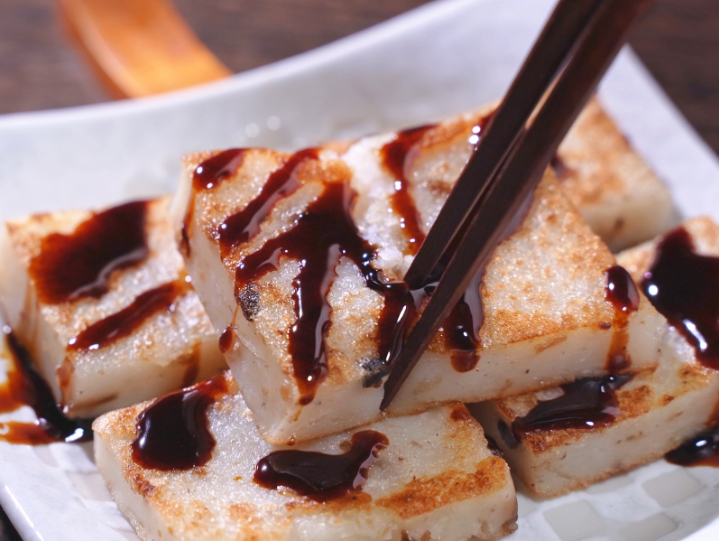
    Several white radish cakes served on a plate. They have been fried golden brown with sweet soy sauce drizzled across them.
    Credit: www.taiwanobsessed.com Article: A Taiwanese Breakfast Foods Guide, Feb 27, 2024 By Nick Kembel

    One of my favorite breakfast foods when in Taiwan is the radish cake. It is made with white radish, rice, and water that is ground into a paste. Once it hardens into a gel, almost resembling tofu, it is cut into blocks and pan-fired until golden brown. It is served with various types of sauces but most commonly sweet soy sauce. People also often order eggs or breakfast sandwiches to go with them. If you want to learn more about radish cakes or Taiwanese breakfast foods, check out Taiwan Obsessed: A Taiwanese Breakfast Foods Guide web article.